The Divided Will: Augustine and Dante on Why Humans Choose Sin | Week 3 of the Summer Curriculum
This week’s reading:
Dante, Inferno — Cantos XXVII-XXXIV
Augustine, Confessions — Books V-IX
In the Confessions and the Inferno, Augustine and Dante show that sin begins when the human will becomes disordered. Augustine explores the struggle of a person who desires the good but is trapped by sinful habits, while Dante portrays the eternal consequence of those who ultimately reject the good. In short, Augustine explains the inner struggle that leads people into sin, whereas Dante describes the final consequences of refusing to change.
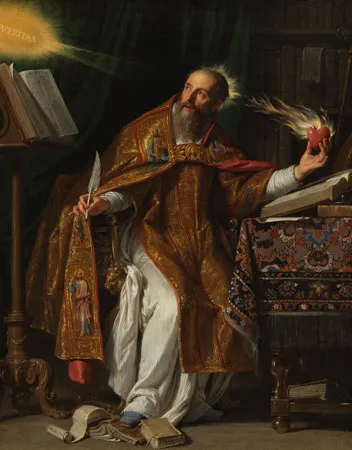
Augustine’s account of his conversion reveals that the problem of sin is not simply a lack of knowledge. He knew what was good, but his will was divided. He writes of being pulled between two desires: one toward God and one toward the pleasures and habits that held him captive. His struggle with lust and worldly ambition shows us that humanity’s greatest difficulty is not merely external temptation, but also the corruption within the heart itself. Humanity recognizes the good while choosing what is evil.
This divided will reaches a tumultuous climax in Augustine’s prayer before his conversion: “Give me chastity and continence, only not yet.” His words reveal the stark contradiction of the sinful heart: he desired freedom from sin, yet still loved the very sin that enslaved him. Therefore, Augustine’s conversion is not simply a change in behavior, but rather a restoration of the will through the grace of God.
Dante explores the same disorder in his journey through Hell. In the final cantos of the Inferno, Dante descends deeper into Hell and encounters those whose sins are not merely failures of weakness but the complete rejection of love and reason. The frozen lake of Cocytus, where traitors are trapped, represents the final result of a soul turned completely inward: a soul completely deprived of the goodness of Christ. The further Dante descends, the less human warmth remains; sin ultimately freezes the heart.
The figure of Satan at the center of Hell is the clearest image of this. Unlike the traditional view of Satan as a powerful ruler, Dante’s Satan is trapped, powerless, and consumed by his own rebellion. He cannot move or reach outward; he is locked forever in self-centered isolation. Sin promises freedom, but ultimately creates bondage.
Reading Augustine and Dante together reveals a common theme: sin is a disorder of love. Augustine teaches that humans sin because their loves are wrongly ordered—they love lesser things above God. Dante shows where that disorder leads when it is never corrected. The sinner does not simply break a rule; he becomes shaped by what he loves.
The hope found in Augustine’s Confessions is that the divided will can be healed. Through God’s grace, Augustine is freed from the chains of his former desires and receives a new orientation toward the good. Dante’s journey through Hell, however, warns that refusing this restoration leads to the complete destruction of the soul’s proper purpose.
Both works ultimately point to the same truth: humanity does not need merely better discipline or greater knowledge. It needs a transformed heart. The problem of sin begins within the will, and only God can restore what sin has divided.